Arts
March marks Women's History Month and Ghana's Heritage month. As the month kicks off, the story of Tekura, one of Ghana's leading producers of art wood crafts and a leader in the interior design sector, stands out among all the inspirational tales of 2025. As a multigenerational family company, Tekura has evolved from an exporter of fine traditional African art handicrafts to an internationally recognized interior design and manufacturing enterprise thanks to its Managing Director, Audrey Forson, who is the daughter of its founders, Kweku and Josephine Forson. The company however was not immune to challenges that most Ghanaian manufacturing businesses encounter. It experienced an unfortunate event more devastating than usual. On Christmas Eve of December 2023, a fire razed its office and workshop in Adenta to ashes, bringing Tekura to the point where many businesses would have collapsed. For Tekura, it was a test of resilience, faith, and regeneration. The rewards were tremendous, with deep lessons for all aspiring cultural entrepreneurs. It has been two years since the incident. Tekura’s 25th anniversary event was an opportunity to celebrate the Tekura’s story.
Tekura was born 25 years ago, as the idea of Mrs. Josephine Kurankyewaa Forson, a secretary employed at the Aid to Artisans Ghana (ATAG), an NGO established in 1989 as a strategic plan to boost the local arts and craft industry. ATAG organized training for artisans and craftsmen in small business practices and supported them to raise their incomes by acting as the interface between artisans, the exporting agents, and the international buyers’ market. With retirement on her horizon, Josephine decided that she would put her experience in organizing ATAG operations into a new venture exporting handicraft herself. Her husband, Kweku Tekyi Forson, an accountant with the Ghana Red Cross, agreed with the idea. He would take an early retirement and join the new venture. With technical and financial support from the American Development Fund, they were able to acquire some machinery to establish a formal workshop. The name of the new venture was named Tekura, a merger between the African names of its founders, Tekyi and Kurankyewaa.
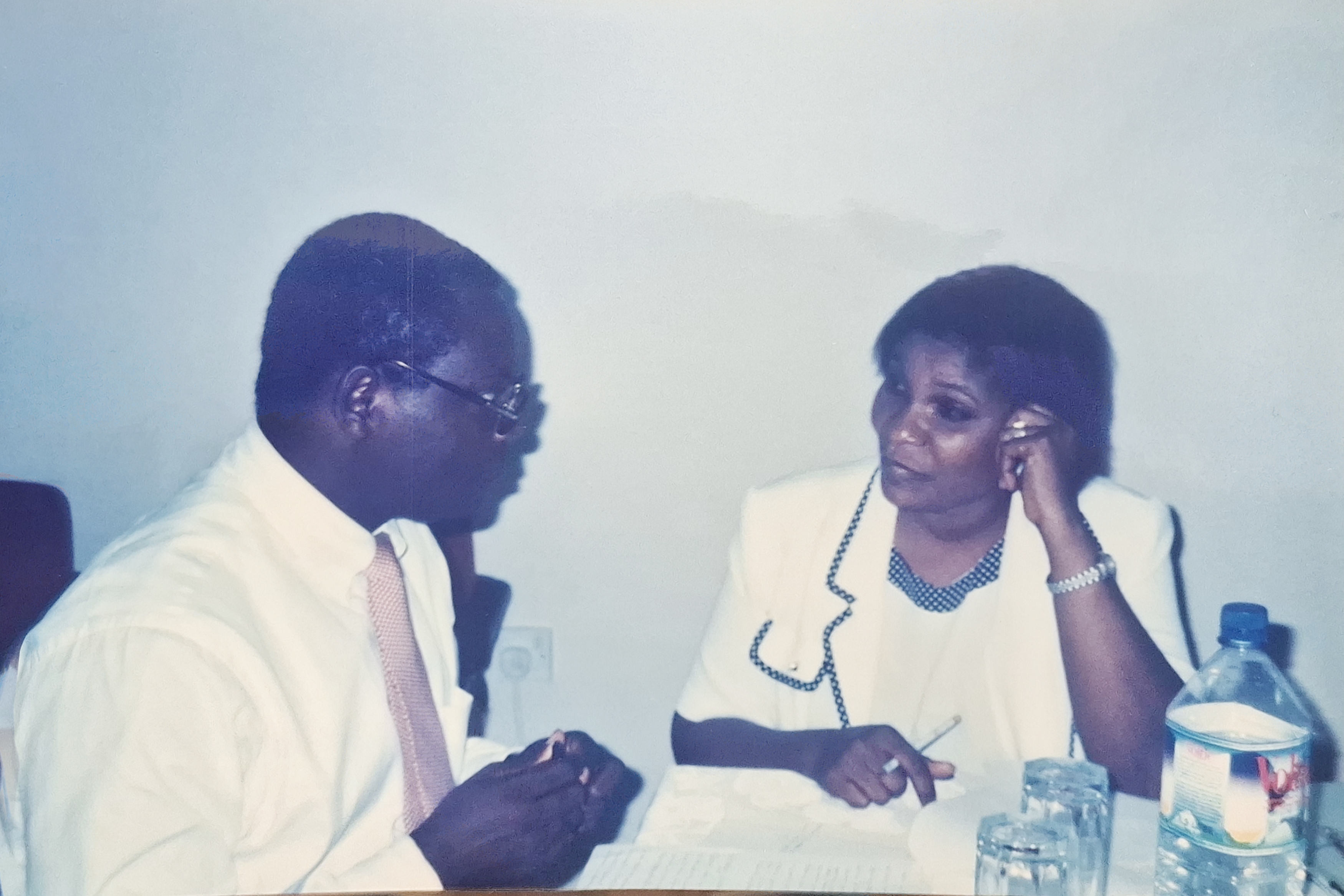
Back then in the year 2000, Adenta, where the Forsons lived, was a sparsely populated new residential area on the outskirts of Accra. A large almond tree stood in the backyard of the Forsons’ 3-bedroom home. Under the shade of the tree became Tekura’s birthplace workshop, a lively place where from dawn to dusk, carvers would strive to polish hundreds of arts and craft pieces, filling the air with the grating sound of sandpaper and the smell of mansion polish.

Once in a few months, an old Mercedes-Benz truck, packed with hundreds of pieces of wooden sculpture, would enter the yard. This truck had made a 6-hour journey down south from Ahwiaa, a town 20 miles north of the Ashanti capital of Kumasi, Ghana’s vibrant cultural capital, ocated in the forest belt of the country. Its cargo, an order from Tekura, consisted of wooden artifacts: masks, busts, walking sticks, fertility dolls, elephants, human figurines, games such as Oware, wooden adinkra symbols of all sizes, and most of all, stools all manufactured in Ahwiaa.
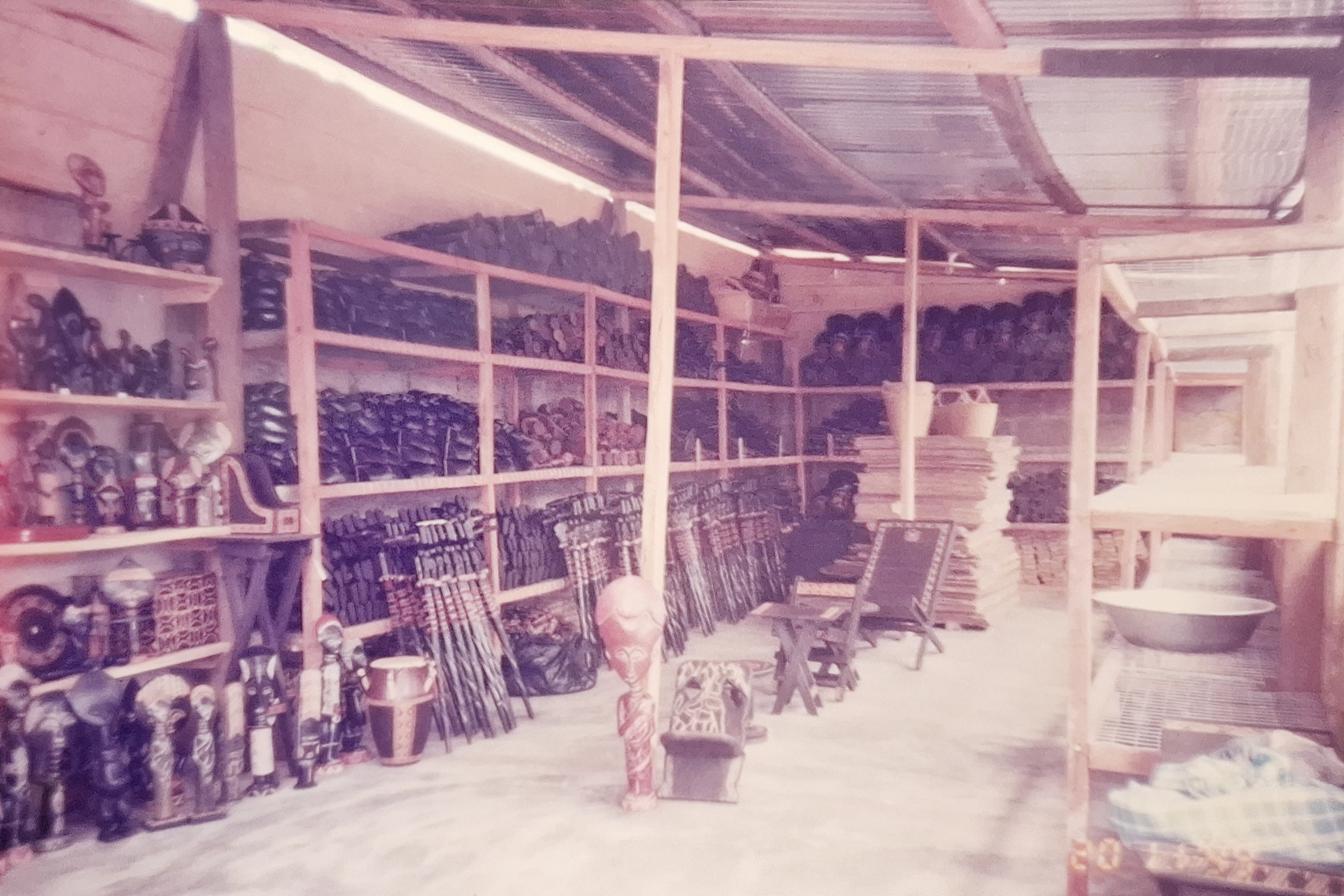
Tekura Showroom in Adenta, Accra. Courtesy of Tekura.
The village of Ahwiaa is notable for its long history of carving and woodwork, especially the creation of the iconic traditional stool that dates back to the early 1700s. Otumfour (King) Osei Tutu I, the founder of the Ashanti nation, built a number of villages, for men of skill who had been taken prisoner during the great war with the Denkyira. Ahwiaa was for woodcraftsmen. The village of Ntonso was created for thosewho were talented goldsmiths, much like Bonwire was for skilled weavers. Three centuries ago, when Ahiwaa was still surrounded by dense, moist tropical vegetation, a party of stool carvers would travel deep into the forests at dawn to find a tree suitable for carving. Trees such as the Nyame-dua (Gods-tree),Tweneboa, Tweneboa (cedar of West Africa), Twafoyeden, and SɛSɛ tree wouldbe their ideal choice. On finding the tree, the lead carver would now perform the ritual to appease the spirit of the tree. He would say:
I am cutting you down to make you a chief; when you are felled, don't let me bewounded; and then, don't break into pieces.
The hewn logs would be carried by the party and brought to the village, and divided into smaller sizes to suit the stool requirements of the chiefs, kings, or elders who may have ordered the stool. The significance of this appellation reflects the religious and political significance in Ashanti culture. Stools are believed to possess the souls of their owners even after death. Men of chivalry are knighted by the king by being given a stool. They are also given as a gift to a woman during a customary marriage. The stool is a key emblem in Ashanti tradition, representing the physical shape that the Ashanti nation's "soul" took when the revered priest Okomfo Anokye summoned it from the sky realms to the earth. Today, it is referred to as the Golden Stool, a representation of an Ashanti unity. This stool was so significant that the British governor ordered its surrender during the late19th-century Anglo-Ashante wars. When the Ashanti refused to give up the stool, King Prempeh I was sent into exile for 26 years.
All stool carving activities took place under sheds located in a clearing in the village. The carving trade was the reserve of men, making the shed a sacred place of social significance and oral tradition. Here, while they worked, they shared their experiences in life and secrets that were not meant to be shared beyond the confines of the shed. The younger carvers benefited from the moral, spiritual advice and wisdom of the elders. Older, retired carvers simply spent the day lying down in the corner of the shed and gave directions for new designs, guiding and ensuring perfection of the craft.
The carvers’ tools were also considered sacred. They were sharpened on a sacred stone after purification rituals were performed over them. This was necessary to avoid severe injury that could be caused by a sharp tool slippingout of the carver’s hand during work. Some important tools are the Asenensosowa, a hoe that is used to chip at the logs, and Sosopaye, a hoe used to split the logs. Chisels for more detailed work are the Sekanmaa or child’s knife, the Ahin, Pewa, and Bowere, or the finger-like chisel or ornamented patternmaking. Generations of skilled carvers in Ahwiaa have produced hundreds of stool designs, each with its own meaning, formed with graceful lines and exquisite craftsmanship techniques passed down through this century’s old tradition. Through its partner carvers at Ahwiaa, Tekura plays its role as a preserver of this age-old woodworking artisanal heritage.
Tekura Showroom in Adenta, Accra. Courtesy of Tekura.
At Tekura, the pieces are unpacked from the old bus and sorted out into sections under a shed. The finishing process started with planning, meticulous sanding, preservative treatment, and final polishing by a group of migrant carvers from the town of Aburi on the nearby Akuapem hills. After this laborious process, the polished pieces would be wrapped in brown paper, marked, logged onto a register, and packed into boxes and packed into container for export. The front porch would be the meeting room, where the Forsons would meet with the agent to finalize the paperwork for export.
Josephine recalls the vivre of the old days, "And then came the milestones that kept us moving, our first export order, our first trade fair in Atlanta, our first international feature, our first loyal customers; a department store in the United States that believed in us long before the world took notice. Each one was a sign that we were walking the right path."
Joining the Design Network Africa exposed Josephine and Kweku to a community of similar artproducers. In 2006, they joined the Design Network Africa, funded by Denmark'sCentre for Culture and Development (CKU), which brought together 11 design companies from the African continent to South Africa to participate in a programme to support and promote art industries ranging from furniture and fabrics to ceramics, jewellery, accessories, and basketry. The participants were well-known companies from Mali, Senegal, Zimbabwe, Burkina Faso, and South Africa, some of whom have become lifelong friends of Kweku and Josephine.
After 17 years of production and export, the Forsons decided that it was time to pass on the baton to the next generation. Kweku explained, "We faced many challenges, from accessing quality raw materials due to the shortage of certain timber species, to limited tools, low technology, high artisan turnover, increasing interestrates, and very low export prices."
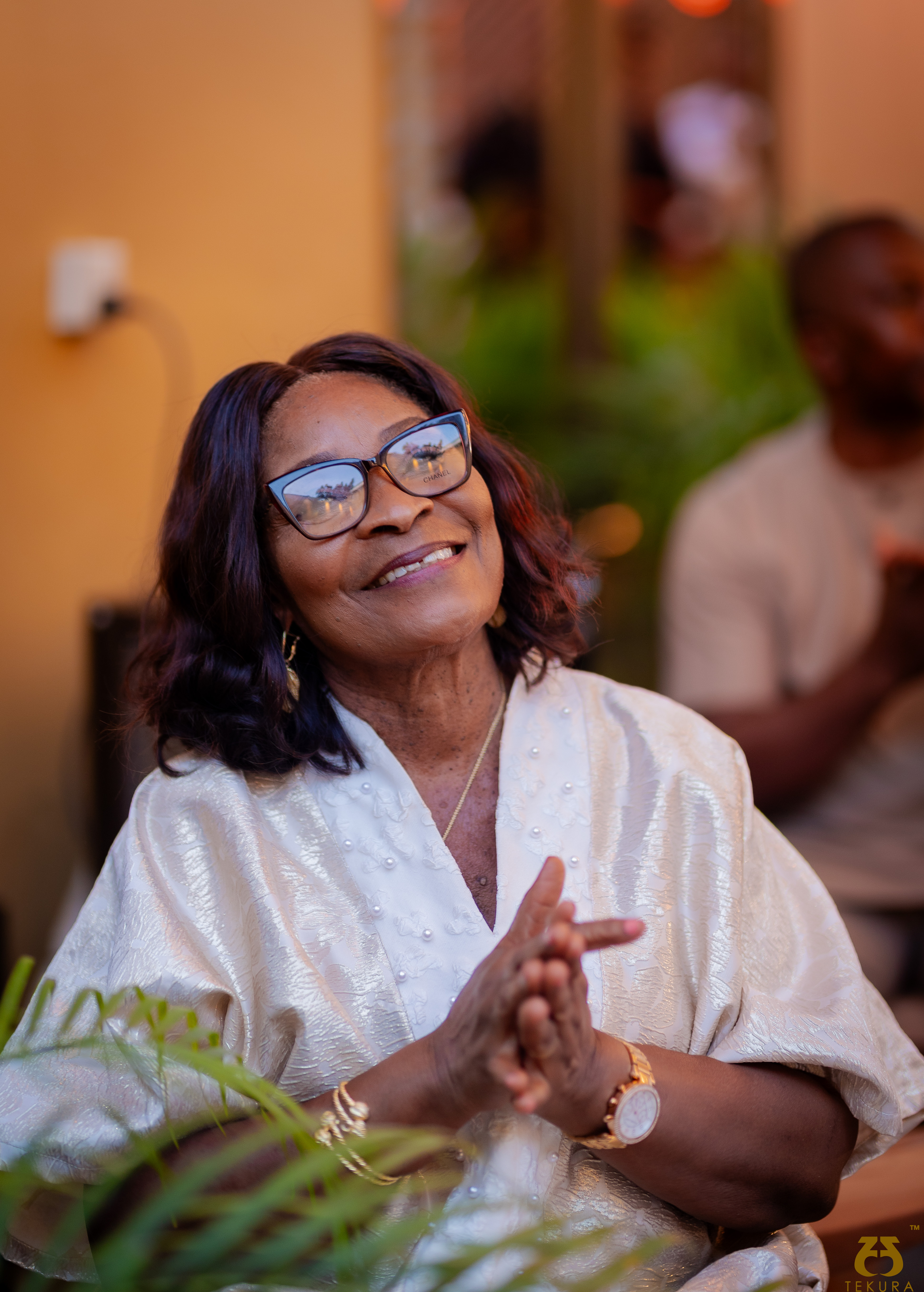
Kweku and Josephine have four children, including a pair of identical twins. The first and second born, Awura-Ama and Paa Kwesi, assisted their parents to manage the company during university holidays. Of the identical twins Audrey and Francesca, Audrey’s interest in art had been evident from a very young age. As a naturally gifted artist with no formal training, her innate ability to sketch, draw, paint, formed the foundation of her creative journey and deepened her connection with her parent’s new business spending her free time around the workshop inspecting the artefacts for defects and uniformity. After her master's in finance, it was unanimously decided by the family that she would be the best fit for the new managing director.
The economic climate in Ghana was changing, and the competition was getting fiercer as the years went by. Ghana’s carvings were being imitated by Chinese producers also trying to enter the US and European markets. Also, the export trade had become more complex than before. Navigating a maze of licences and approvals had raised the business of arts and crafts from simplicity to considerable complexity. This included applying for Export promotion certificates, certifications from Customs (CEPS), approvals from the Bureau of National Investigation, Narcotics Board, and Museums and Monuments Board, the Lacey Act and Plant Product Declaration form, and Forest Law Enforcement Governance and Trade (FLEGT) licences. This web of approvals required a higher level of standards and compliance from the tree cutting to artifact sale to ensure a spot in the world market.
Audrey represented Tekura in the Design Network Africa, attending Trade Shows and art exhibitions in South Africa, Morocco, France, New York, and Denmark, where she attended short courses,lectures, and expos on design and business. Here, she learnt the importance of good design and gained further knowledge of the business of production. Kweku and Josephine eagerly approved her plans to expand Tekura to add Africandecorative furniture to their catalogue. At home, Audrey's vision was already taking shape, transforming the backyard into a new workshop with a new multi-function woodworking unit, which called for the use of safety gear, fire safety, and a first aid unit.
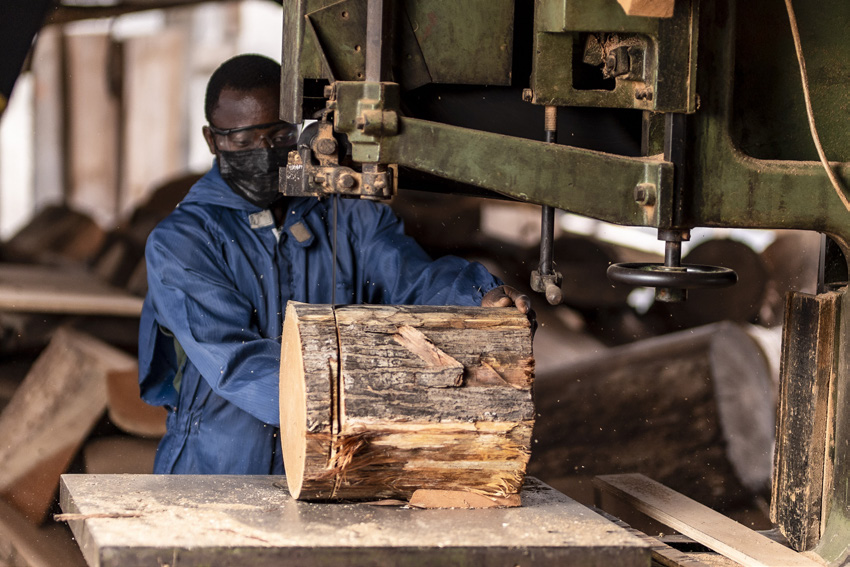
However, at the workshop, change was not as easily accepted as expected. A controversial suggestion by Audrey to cut Ahwiaa out due to the distance did not sit well with the workers, as it broke old business relations. Audrey argued that the distance and deteriorating roads would increase transportation costs and delay delivery. The more economic alternative was an arrangement with the Forestry Commission to supply waste timber logs from logging companies directly to Tekura in Accra. Not only would the irregular logs be used in the production of bespoke sculpture and special decorative pieces, it would also satisfy the growing requirement for sustainable environmental practice. Older artisans perceived this as breaking old relations with Ahwiaa. The tense atmosphere was quickly dissipated by the advent of the Covid pandemic, which led to an abrupt halt of production at Tekura for nearly a year.
The lull was good for the company as it gave time for reorganization. Audrey also sought to expand Tekura’s design portfolio to offer a variety of pieces that would identify Tekura as a brand, hence the popular Tekura stool. She sought tutorship from Hamed Ouattara, a renowned Burkinabé multidisciplinary artist and designer celebrated for transforming upcycled materials into unique, contemporary furniture and sculptures that blend African traditions with modern global influences. Famous Malian-based architect-artist Chiek Diallo, an old friend of Kweku and Josephine from the Design Network Africa, whose work includes a diverse range of furniture from waste material, also guided Audrey in new artistic directions for furniture production.
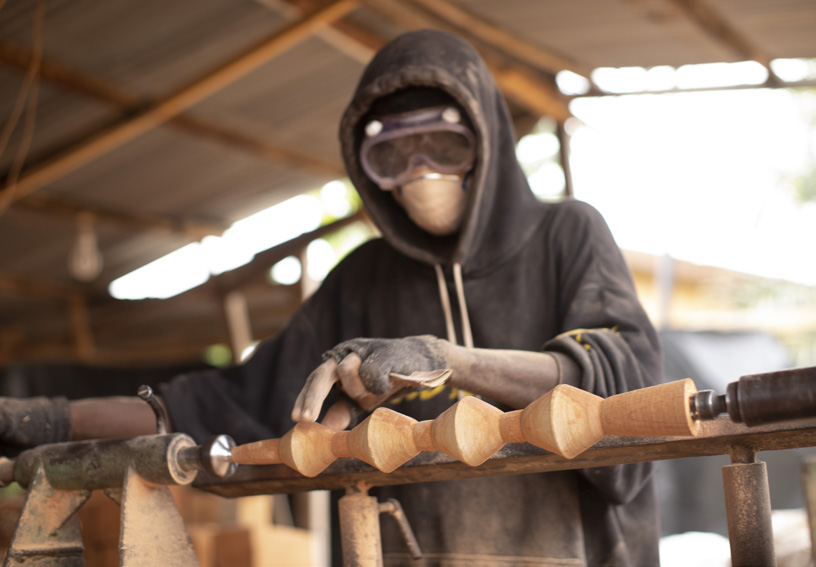
Top: Finishing of furniture pieces at Tekura workship; Bottom; W Stool from reclaimed wood. Images courtesy of Tekura.
Under Audrey’s leadership, the strategic focus shifted from production alone to branding, professionalism, scalability, and global positioning. This included trademarking the brand, introducing corporate governance structures, building a formal management team, and hiring non-artisan professionals such as production managers, product designers, interior designers, supervisors, and administrative leadership. A clear organogram, board oversight, and compliance frameworks were introduced to ensure accountability, investment readiness, and sustainable growth. Tekura entered the world of luxury African decor and interior design. It would not be odd to find a Tekura piece in the reception lobby of boutique hotels in Accra, as the company’s reputation as a brand grew slowly.
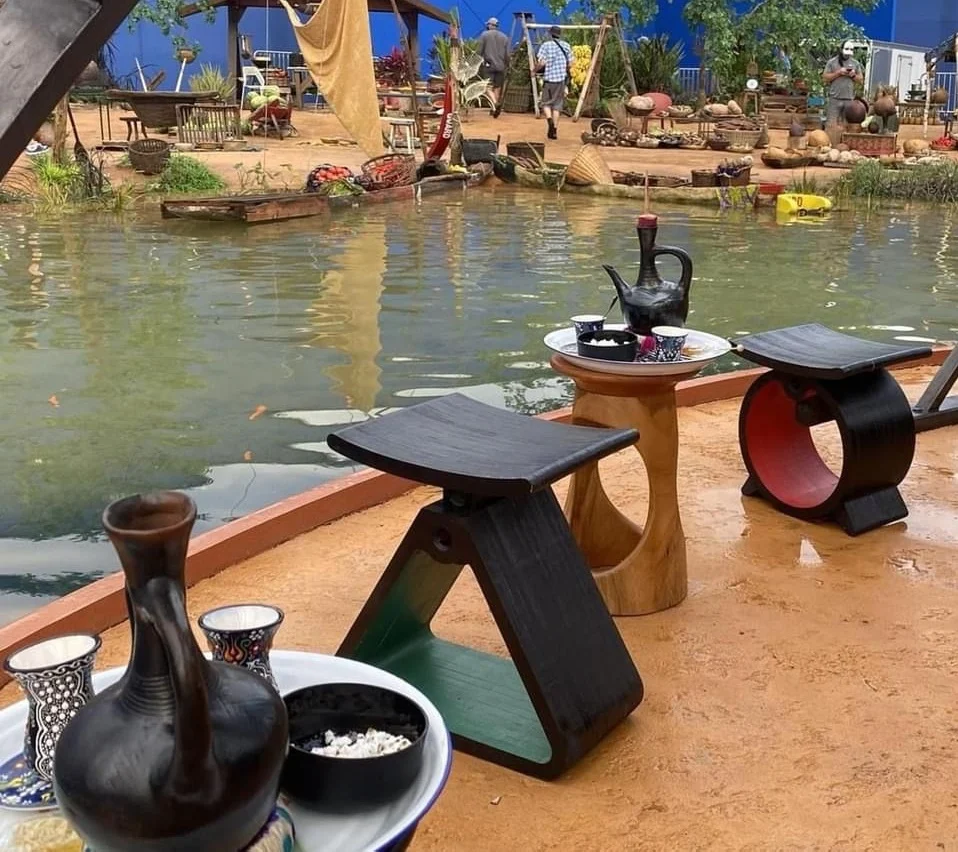
Finally, Tekura as a brand got its greatest global exposure through its partnership with 54Kibo, a luxury African decor shop based in New York, which had gained its reputation as a retailer for African designs of modern interiors, light fixtures, wall art, furniture, and luxury home goods gathered from designers from around the continent. In 2022, the producers of the Black Panther Wakanda Forever movie commissioned 54Kibo to select design companies, Tekura, Modern Gesture, and Jomo Tariku to produce some pieces for the film set. Tekura’s Djembe table, originally designed by Kweku Forson in collaboration with a South African designer, appearing on the big screen set the company on the ascent for more global recognition. Invitations to participate in design fairs across the world began to flood Tekura’s inbox.
As Tekura became more well-known both locally and internationally, internal conflicts surfaced. Because artisans who perceived the brand's success as a personal entitlement began to make irrational demands. When these expectations were not fulfilled, a number of employees left the company and joined a disgruntled group of former employees. Later, it was discovered that this group was responsible for certain occurrences including theft, sabotage of export orders, and intentional product damage that had been happening in the past. Audrey recalls feeling an ill instinct for weeks. Something did not feel right.
On 23rd December 2023, in the dead of the night, the neighbors woke the Forsons up to a dreaded sight of the Tekura workshop on fire. Although the Fire Service arrived promptly, the chemical store and the electrical room had turned the blaze into an inferno, blackening the night sky. The damage was extensive, having affected the pile of wood cuttings. The morning after brought tears to the eyes of visiting well-wishers and small crowds that gathered in sympathy. The police suspected foul play. Fraternal messages kept on pouring from the art community for weeks.

What does it take for a successful business to rise again from a sudden disaster? How long would it take? How does a business recapitalize after a disaster? The story of Tekura’s rise from the ashes is more than preparing paperwork for Bank loans. Audrey advices:
“It’s about finding the will to continue despite the odds and getting over the paranoia that accompanies suspicion and superstition after any misfortune, especially in our part of the world. One must shorten the time playing the blame game and concentrate on leveraging one's past good financialperformance and reputation to attract finance. The disaster must be looked upon as an opportunity to re- organize and improve business practice”.
For its rise from ashes, Tekura has the Ghana Enterprise Agency (GEA) and ABSA Bank, both supporters of Small-Scale Enterprises, and a wide network of well-wishers and old clients who graciously raised funds to help bring Tekura to life again.
Since then, Tekura’s light has begun to shine again and even stronger. The calls for participation in international fairs have increased. The INDEX Design Qatar, held from October 2024 at the Doha Exhibition & Convention Center (DECC), saw all Tekura pieces sold at the Africa section.
In April 2025, Tekura was invited to feature in the Salone del Mobile fair in Milan, which included the Craft West Africa exhibition at the Salone Satellite, an annual showcase of emerging designers. The highlight of the exhibition wasthe Djembe table from the Black Panther movie.
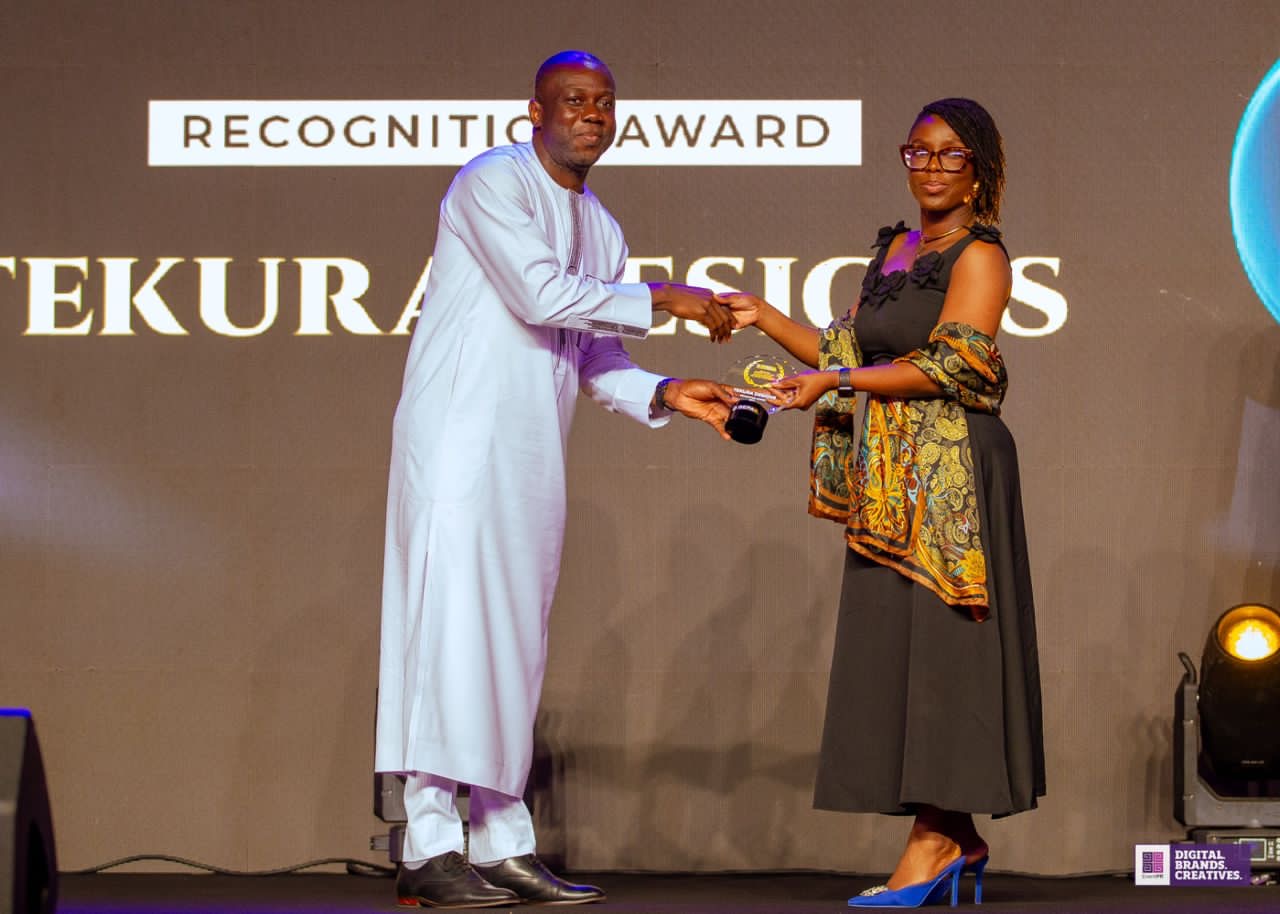
In December 2025, Tekura won an Industry Recognition Award at the Ghana Export Promotion Authority's (GEPA) combined 33rd and 34th President's National Awards for Export Achievement, honoring their tenacity, craftsmanship, and global promotion of African woodcraft and design. The prize recognized the company's ability to rebuild and repositionitself internationally following a tragic fire, as well as its resilience and effective generational shift.
Today, Kweku and Josephine still supervise work and manage production while Francesca, a lawyer, offers legal advice to support Audrey, who is preparing to find new markets in Asia and the Arab world. The future for the Tekura brand looks more than promising after the fire as symbolized by its new emblem; the Pheonix -rising after the fire. Tekura stands for an African identity through authentic, traditionally inspired designs, excellent craftsmanship and high-quality production. As an industry leader, Tekura is demonstrating the way to change the narrative of scarcity and poverty in Africa by building Ghana’s creative industry and promoting Ghana through art and décor.
Credits


related articles


Architecture, Art, and Design of Africa and the African Diaspora. We seek out African creatives who instigate positive change through design and art.


